For years I believed the smoke ring on a good brisket was literally smoke soaking into the meat. That’s what everyone told me, that’s what I told other people, and it turns out we were all repeating a myth. I only found out how wrong I was when I started digging into the actual food science behind it while trying to figure out why my electric smoker never produced much of a ring even when the meat tasted plenty smoky.
Once I understood the real chemistry, a lot of confusing results from different smokers finally made sense.
It’s Not Smoke. It’s Gas You Can’t See.
According to food science research compiled by Meathead Goldwyn at AmazingRibs.com, one of the most respected sources on barbecue chemistry, the smoke ring forms when nitric oxide and carbon monoxide, invisible combustion gases, react with myoglobin, the protein responsible for the pink and red color in meat. These gases dissolve into the wet surface of the meat and bind with myoglobin, preventing it from converting into the brownish compound it normally turns into when heated.
The visible white smoke billowing off your smoker isn’t actually the active ingredient. It’s the same combustion process producing both, so they show up together, but the smoke ring itself comes from gases you can’t see at all.
Why It Only Forms Early in the Cook
Once the meat’s surface heats past a certain point, the myoglobin denatures and locks in whatever color it had at that moment. That’s why the smoke ring only grows in the first hour or two of a long smoke, after that, the surface has already cooked past the point where the reaction can still happen. This explains something that used to confuse me: why extending a stall or wrapping a brisket in foil partway through doesn’t produce a deeper ring even with more time in the smoker. The window for ring formation has already closed by then.
This Is Exactly Why Electric Smokers Struggle Here
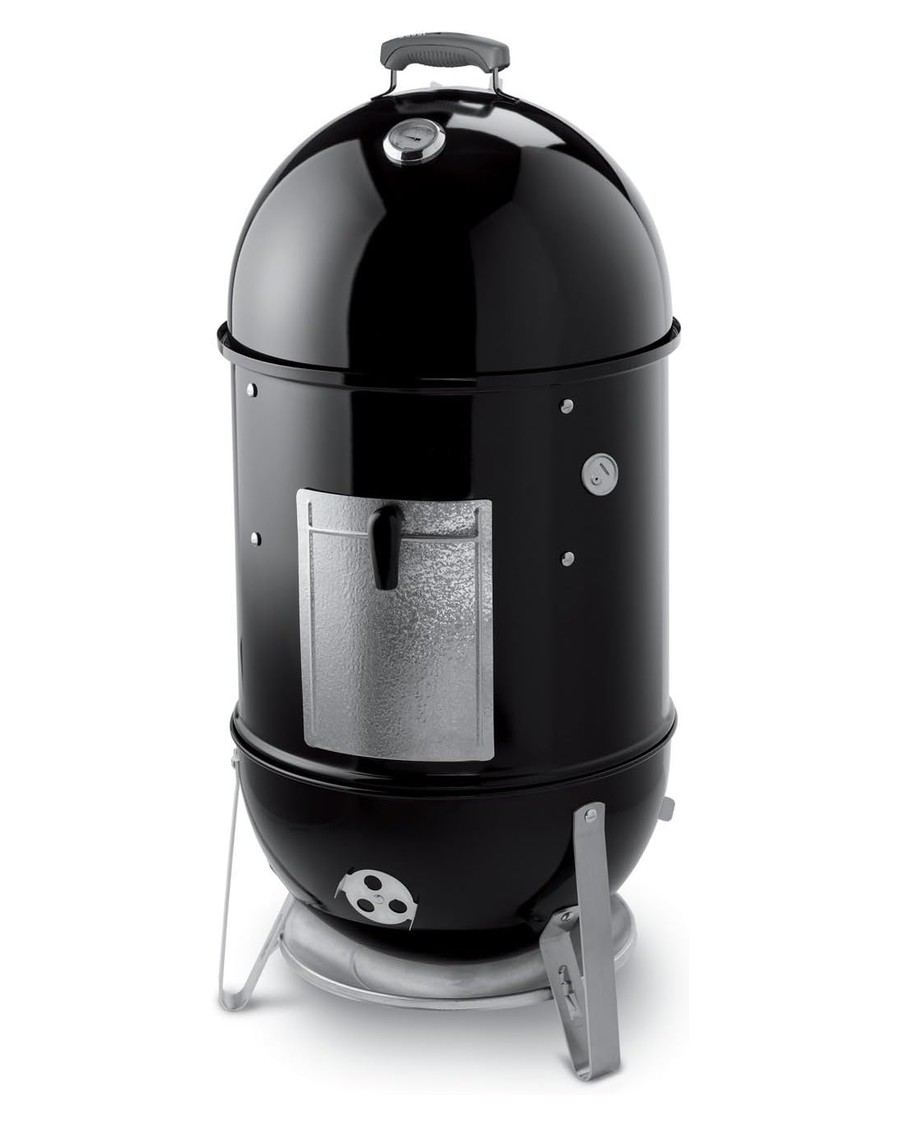
Electric smokers heat with a resistive element rather than burning fuel directly, which means they simply generate less of the nitric oxide and carbon monoxide that create the ring in the first place, even when you’re using wood chips for flavor. The wood is smoldering for aroma, but the overall combustion happening in the unit is lower than a live charcoal or wood fire produces. This lines up with what I found running the exact same cut through a electric smoker versus a charcoal smoker for a comparison piece: the electric batch tasted good but showed barely any ring, while the charcoal batch had a ring you could see from across the table.
To be clear, this doesn’t mean electric-smoked meat tastes worse. Flavor and the smoke ring are related but separate things, you can absolutely get great smoky flavor without much of a visible ring, and a deep ring doesn’t automatically mean better flavor either. It’s mostly a visual marker, not a flavor guarantee, something a lot of barbecue competitions have quietly acknowledged by not actually judging the ring itself.
Can You Fake a Smoke Ring? (And Should You?)
Some commercial products use curing salts like Prague Powder to chemically produce a pink ring without any smoke at all, since the same myoglobin reaction can be triggered other ways. Competition cooks have used this trick for years, and it’s a genuinely interesting bit of food chemistry, but I’d rather chase real flavor from real wood than fake the visual. If you want a deeper natural ring, the most reliable lever is simply using a fuel source with more active combustion early in the cook, meaning real charcoal or wood rather than gas or electric heat.
Things That Actually Help You Get a Better Ring, If You Want One
If you’re using charcoal or a gas-and-wood combo and still want to maximize your ring, a few things genuinely help. Keeping the meat surface cold and slightly damp when it first goes on the smoker gives the gases more time to dissolve into the surface before it heats through. A light coating of moisture, some people use a thin mustard binder or just pat the surface with a bit of water, helps this along. Starting your smoke at a lower temperature for the first hour before ramping up also extends the window before the myoglobin denatures and locks the color in.
None of this is about masking flavor. It’s purely about giving the chemistry more time to work before the surface cooks past the point where it can still happen.
What Actually Matters More
After chasing this rabbit hole, I’ve landed somewhere pragmatic: the smoke ring is a nice bonus, not the goal. If you’re running an electric or gas smoker and getting a thinner ring than your charcoal-loyal neighbor, that’s not a sign you’re doing anything wrong, it’s just chemistry. Focus on internal temperature, bark development, and actual flavor, the things that determine whether your barbecue is genuinely good, not just photogenic.



![Latest-Grilling-Technologies-1[1]](https://grillsforever.com/wp-content/uploads/2018/06/Latest-Grilling-Technologies-11.jpg "Latest Grilling Technologies: Take Your Grilling Experience to a Whole New Level!")