I ignored my pellet grill’s hopper for an entire season once. Just kept dumping new pellets on top of old ones, figured the auger would sort it out. It didn’t. One Saturday, mid-brisket, the auger jammed solid on a clump of moisture-swollen sawdust that had been sitting at the bottom for who knows how long, and I spent forty-five minutes with a shop vac and a butter knife trying to clear it while my guests pretended not to be hungry. That’s the day I actually started maintaining the thing properly, and I haven’t had a jam since.
Pellet grills get marketed as the “set it and forget it” option, and mostly they are, but that reputation quietly assumes you’re doing a bit of upkeep behind the scenes. Here’s the actual schedule I follow now, broken down by how often each task really needs doing.
After Every Cook (5 Minutes)
- Empty the grease bucket. This is the one people skip most often, and it’s the one that causes grease fires if you let it overflow. A quick dump every time takes ten seconds.
- Check the drip tray or foil liner for buildup and replace or scrape as needed.
- Close the hopper lid tightly to keep moisture out between cooks, this matters more than people think.
Every 4-6 Cooks (20 Minutes)
- Vacuum out the firepot and burn area. Ash accumulation here can interfere with your igniter and cause inconsistent lighting.
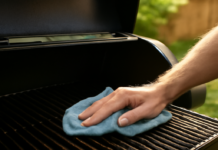
- Wipe down the grates with a grill brush and a damp cloth rather than letting carbon build up indefinitely.
- Check the auger for any residual pellet dust clogging the feed tube, this is the early warning sign that prevents the exact jam I had.
Once a Season (An Hour, Worth Every Minute)
- Fully empty the hopper and vacuum out any accumulated sawdust or degraded pellets sitting at the bottom. Pellets absorb ambient moisture over time and swell, this is exactly what jammed my auger.
- Inspect the auger motor for unusual resistance when turned by hand (unplugged, obviously).
- Deep clean the grease management system end to end, not just the bucket.
- Check the door and lid gaskets for wear, a leaky seal makes your grill burn through more pellets than it should to hold temperature.
Why Pellet Quality Matters More Than People Realize
A lot of maintenance headaches actually trace back to pellet quality, not the grill itself. Cheap pellets with more filler and binder leave behind more ash and are more prone to crumbling into fine dust that clogs feed mechanisms. Consumption itself varies a lot depending on what temperature you’re running: according to consumption data compiled by PelHeat’s pellet usage research, expect to burn through roughly a pound of pellets per hour at typical low-and-slow smoking temperatures, climbing toward two and a half pounds an hour if you’re pushing into searing range above 375°F.
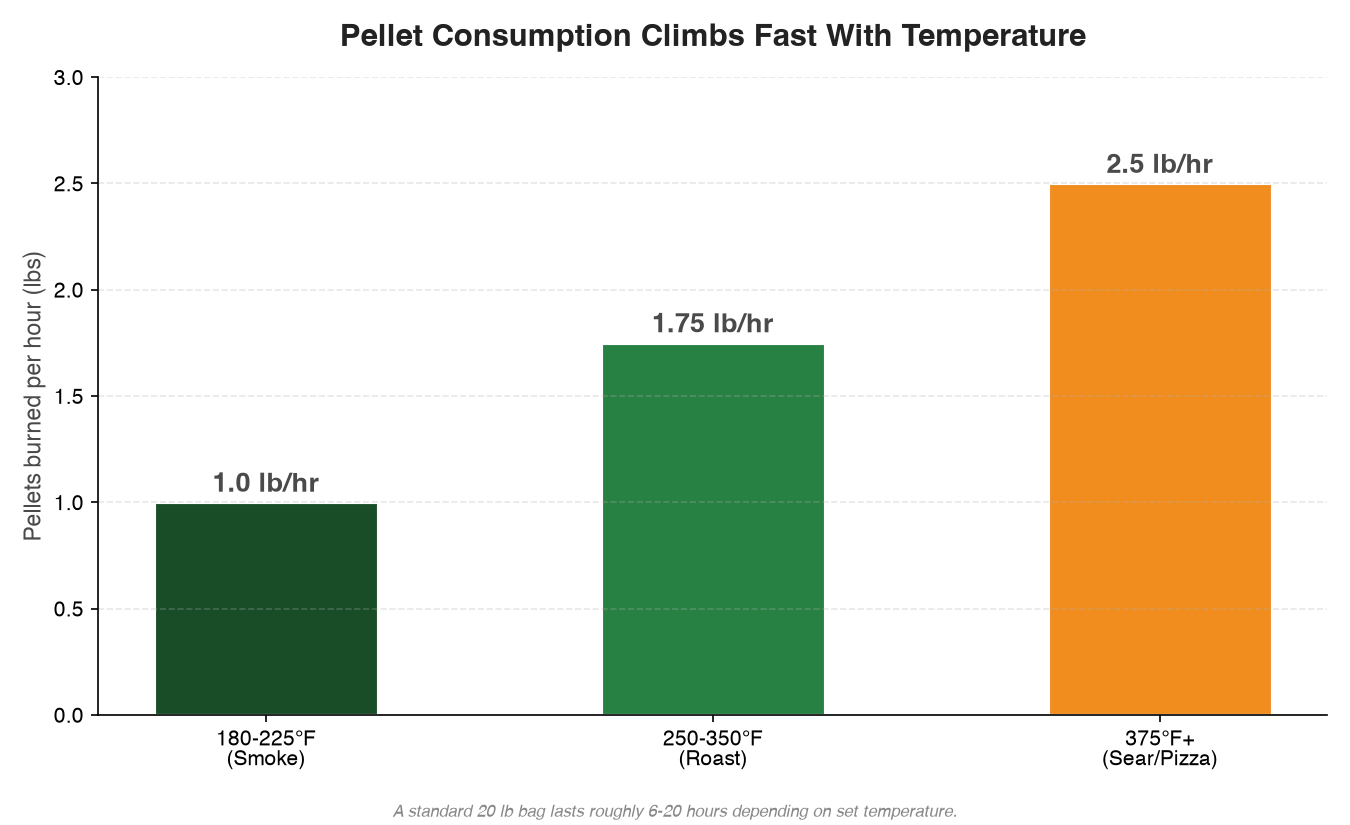
That means a standard 20 lb bag can last anywhere from around six hours to nearly twenty depending entirely on what you’re cooking and at what temperature, which is worth knowing before you plan an overnight brisket and realize halfway through that you’re running low.
The Igniter Rod: Small Part, Big Headache
If your grill is struggling to light or taking noticeably longer than it used to, the igniter rod is usually the culprit before anything else. It’s a small, inexpensive heating element, but it sits directly in the firepot where it accumulates ash and grease residue every single cook. I clean mine with a soft brush during my every-4-to-6-cooks pass, and I’ve gone years longer between replacements than friends who skip this step and end up buying a new igniter every season.
One thing I learned from a technician at a local grill shop: don’t use compressed air to blast ash off the igniter. It’s tempting, but the pressure can crack the ceramic coating on some models. A soft-bristled brush and a gentle wipe does the job without the risk.
Reading the Smoke as a Diagnostic Tool
Thin, blue-tinged smoke means you’re burning clean. Thick, white billowing smoke that doesn’t taper off after the first ten minutes usually means airflow is restricted somewhere, often a firepot that needs vacuuming or a grease buildup smothering the fire more than it should. I’ve started treating smoke color as an early warning system rather than just an aesthetic thing, it tells you what’s happening inside the burn chamber before a bigger problem shows up.
Storage Between Seasons
If you’re not using your grill for an extended stretch, don’t leave a half-full hopper sitting there. Empty it into a sealed, airtight container (a five-gallon bucket with a gamma lid works well) and store it somewhere dry. Pellets left in a hopper through a humid month can swell enough to jam an auger even before you get to your first cook of the new season.
If your current pellet grill is on its last legs, or you’re shopping for your first one, we break down what actually separates a reliable unit from a maintenance headache in our full pellet smoker reviews, including which models have held up best for owners over the long haul, not just on the first few cooks.