Wood chips vs wood chunks for smoking can be confusing if you’re chasing steady, clean flavor. This guide explains what chips and chunks are, how to tell them apart, why chunks often outperform chips, and when chips still make sense. You’ll also learn whether soaking helps, when to add wood during the cook, and how to store chunks so they stay ready.
What are wood chips
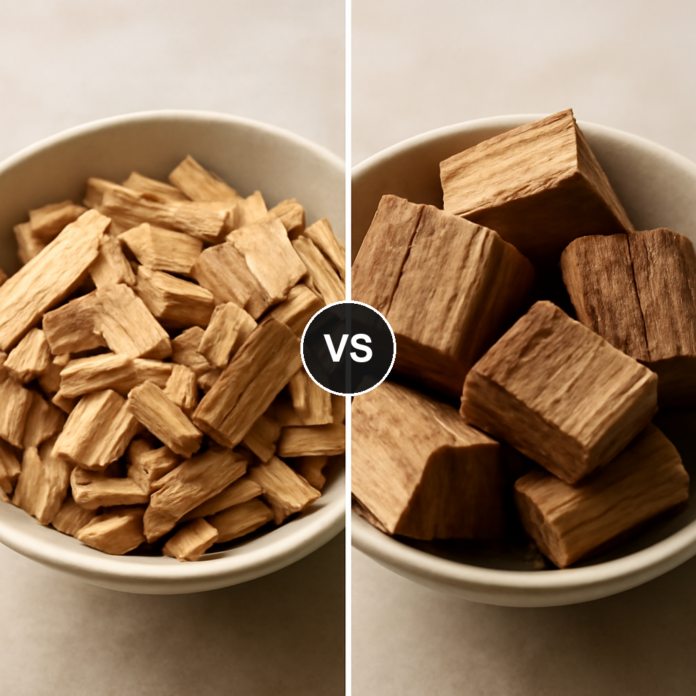
Wood chips are small, irregular pieces of hardwood cut for cooking smoke. Their thin profile lets them catch easily and smolder quickly, delivering a fast wave of flavor rather than an hours-long burn. You’ll find them bagged by species—hickory, apple, cherry, pecan, mesquite, oak—so you can match wood character to the meat and intensity you want.
- Typical size: About thumbnail-sized flakes and splinters; much smaller than chunks.
- Composition: Kiln-dried or air-dried hardwood, sometimes with bark-on; species choice affects sweetness, strength, and aroma.
- Burn behavior: Lights fast, produces immediate smoke, and depletes sooner than larger pieces.
- Packaging: Sold loose in bags; easy to measure by handful for repeatable results.
Chips are versatile across cookers. On a gas grill, place a handful in a smoker box or a foil packet with a few vent holes and set it over a burner. On a charcoal grill, scatter a small handful directly on hot coals or bury some in a hot zone for staggered smoldering. In many electric smokers, chips go into a dedicated tray. Choose species and portion size based on the protein and how assertive you want the smoke to be.
What are wood chunks
Wood chunks are mid-sized pieces of hardwood cut or split from larger logs, used to generate clean, steady smoke in a cooker. They’re bigger than chips but far smaller than splits or logs, giving you a manageable, long‑smoldering fuel for flavor rather than heat.
- Typical size: About two to three inches across; roughly palm or egg sized. Irregular shapes are fine if density is similar.
- Material: Seasoned hardwoods such as oak, hickory, apple, cherry, or pecan. Bark may be present, but the wood should be dry, solid, and free of mold.
- Burn behavior: Designed to smolder instead of flame, producing a steadier smoke stream and requiring fewer refills than small chips.
- Best pairing: Charcoal-fired cookers—kettle grills, kamados, and offset smokers. Also workable in a gas grill’s smoker box or foil packet.
- Selection tips: Choose dense, clean pieces. Avoid softwoods, construction scraps, or anything painted, stained, or treated.
Use one or more chunks placed directly on or near hot coals to season the fire with smoke. They’re a natural match for charcoal cookers (see best charcoal smoker reviews if you’re comparing options).
How to tell chips and chunks apart
When you’re sorting fuel, chips and chunks are easy to tell apart once you know the cues.
- Size: Chips are small fragments—think slivers and flakes. Chunks are palm-to-fist pieces you place individually.
- Shape: Chips are irregular and thin; chunks show blocky faces with visible end grain or growth rings.
- Thickness: Chips are usually only a few millimeters thick; chunks have real dimensional thickness on every side.
- Weight in hand: A handful of chips feels light and pourable; one chunk has heft on its own.
- Handling test: Chips pour like cereal into a smoker box or foil pouch. Chunks don’t pour—you set one or two by hand.
- Grate test: Chips can fall through wide grates or charcoal baskets; chunks sit securely on top.
- Cut marks: Chips often have splintered edges from chipping; chunks show saw-cut or split faces.
- Bark presence: Both can include bark, but on chunks it appears as a larger patch, not tiny flecks.
If you still aren’t sure, spread them on a sheet pan: chips form a shallow, shingle-like layer; chunks rise as individual blocks with clear height and edges.
Why wood chunks often outperform chips
For most low-and-slow cooks on charcoal and stickburners, wood chunks usually outperform chips. Their larger mass resists flash ignition, so they smolder steadily and deliver cleaner, more predictable smoke without constant reloading. That steadiness helps you focus on fire management and food, not feeding a chip tray so often.
- Clean combustion: chunks warm through, off-gas, then produce thin blue smoke instead of sooty bursts.
- Longer burn windows: a few well-placed chunks can carry long stretches between additions.
- Temperature stability: fewer lid openings and airflow spikes reduce pit swings.
- Flavor clarity: less risk of acrid, bitter notes from smoldering piles of tiny pieces.
- Placement control: nestle near, not directly on, the hottest coals to modulate output.
On charcoal kettles, drums, ceramics, and offsets, chunks integrate with the coal bed for predictable, repeatable smoke. Choose seasoned hardwood chunks and space them around the fuel so each lights in sequence rather than all at once.
When wood chips are a smart choice
Wood chips make sense when you need fast, controllable smoke without committing to a long fire. Because they ignite and combust quickly, chips are ideal for adding a clean burst of flavor while keeping temperatures steady and fuel management simple.
- Gas or electric setups: If your grill or smoker has a chip tray or smoker box, chips deliver dependable smoke without fuss.
- Short cooks: Thin, quick-cooking foods—fish fillets, shrimp, wings, pork chops, sausages, and vegetables—benefit from chips’ rapid smoke production.
- Delicate flavors: When you want a light touch that won’t overwhelm mild proteins or veggies, chips are easier to dose in small amounts.
- Small or travel cookers: Compact kettles and portable grills often respond better to chips than to bulky fuel additions.
- Flavor testing: Mix a small handful of different woods to audition blends without burning through lots of fuel.
- Cold-smoke accessories that specify chips: Some generators are designed around chip size and flow.
Use a smoker box or a foil packet with vent holes on a burner or over coals, or scatter a modest handful directly on hot charcoal. Keep portions modest; thin blue smoke beats thick, billowy clouds every time.
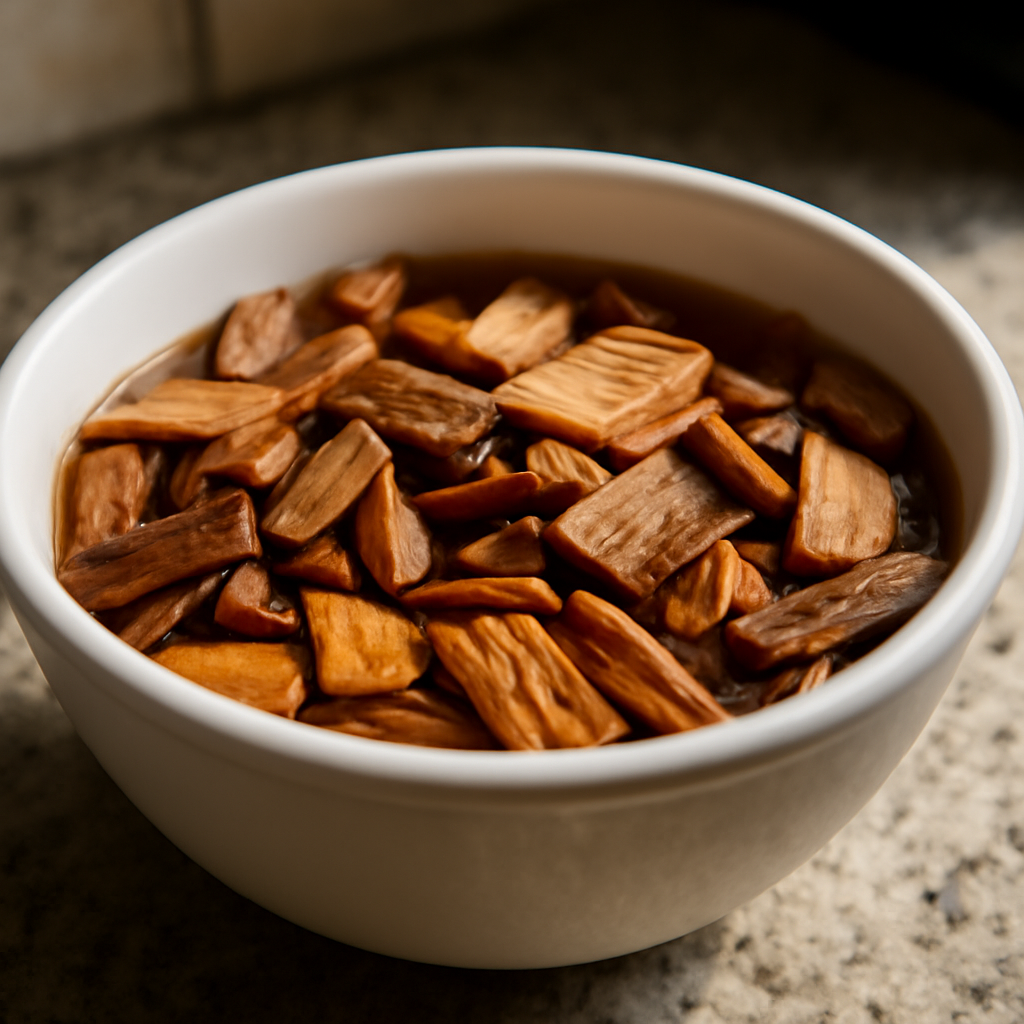
Should you soak smoking wood
Skip soaking. Wood isn’t a sponge; only the outer shell takes on water, and that moisture has to boil off before the wood can actually smoke. Until then, you’re driving steam through your cooker, not flavor.
- It delays clean, thin-blue smoke and often produces puffy white vapor that can taste sharp.
- It cools the firebox and complicates temperature control and timing.
- It doesn’t meaningfully extend burn time; it mostly postpones ignition.
- It encourages smoldering instead of clean combustion, which risks bitter residues.
If chips scorch in a hot gas grill or chip pan, don’t reach for a bucket. Contain them. Use a smoker box or a foil packet with a few pinholes to meter oxygen so chips smolder steadily without being doused. Where your pit allows, use chunks instead of chips for steadier, cleaner smoke. If you want moisture in the cook chamber, use a water pan—don’t wet the fuel.
- Narrow exceptions: a light spritz on chips can tame flare-ups when you toss them on roaring coals, then spread them thin.
- Plank grilling often calls for soaking the plank to prevent fires; that’s fire control, not smoke enhancement.
For predictable, clean flavor, keep smoking wood dry and manage heat and airflow instead.
When to add wood during the cook
Whether you reach for wood chips vs wood chunks, keep the basics of grilling fire safety tips in mind near any open flame or hot coals.
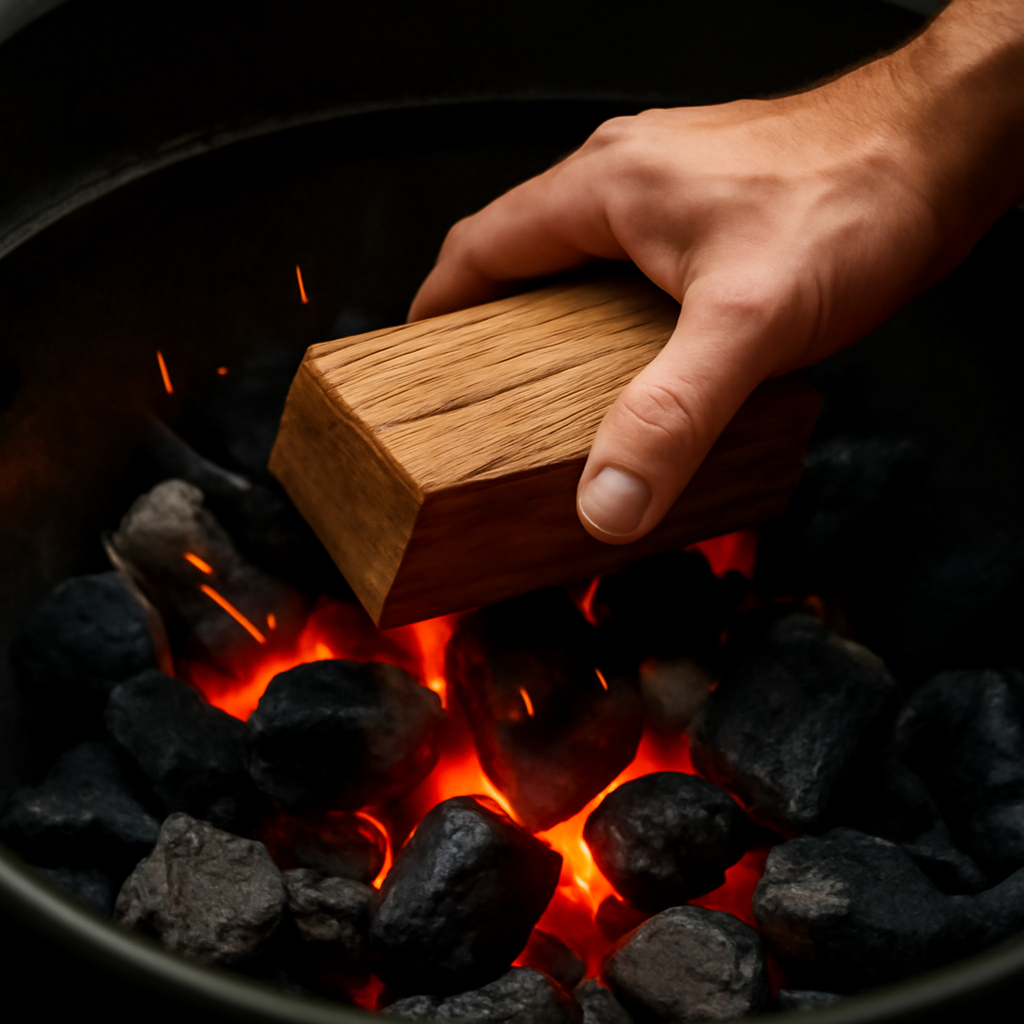
General rule: Add smoking wood once your cooker is hot and the fire is burning clean. You’re looking for steady heat and thin, almost blue smoke. Put the food on, then introduce the wood early in the cook, when the surface is still cool and moist; that’s when smoke compounds adhere best and the smoke ring is formed.
By cooker type:
- Charcoal kettles/offsets: Set one or two chunks at the fire’s edge so they smolder, not flame. For long burns, tuck a couple among unlit coals to ignite later.
- Kamado: Mix a few small chunks into the lump before lighting, then add one to the hot zone after temperatures stabilize; airflow is efficient, so use restraint.
- Gas grill: After preheating and dialing in burners, place a small packet or smoker box of chips over an active burner. Add early, and only refresh when the smoke thins.
Chips vs. chunks timing: Chips burn fast; add in small charges as clean smoke fades, letting each batch clear before reloading. Chunks smolder longer; a modest early addition often carries you through the first stretch.
Stop feeding wood once color is set and smoke has tapered off; late additions can taste sharp without adding much benefit. It’s easier to add a little early than fix over-smoking.
How to store wood chunks
Wood chunks keep best when dry, ventilated, and off the ground. They also absorb odors, so store them away from chemicals and fuels.
- Air-dry under cover before stashing. Split oversized pieces to speed drying and prevent hidden moisture.
- Elevate and ventilate: use pallets, wall racks, milk crates, mesh bags, or slatted boxes for airflow.
- Cover, don’t seal: keep rain off with a roof or tarp, but leave sides open.
- Avoid airtight plastic. If bins are necessary, drill vents and check for condensation; open to dry if needed.
- Keep in shade and moderate temps; avoid damp basements and concrete floors that wick moisture.
- Separate and label by wood species and chunk size. Rotate, using older pieces first.
- Keep odors out: store far from gasoline, solvents, paint, and scented products.
- Inspect regularly. Brush off light surface fuzz after thorough drying; discard soft, punky, or heavily moldy pieces.
- For pests, keep stacks a few inches off floors and walls; use breathable lids or fine mesh to deter rodents.
Now you can choose between chips and chunks with confidence. Use what fits your cooker and cook length, keep your plan for when to add wood, and skip soaking unless you have a specific reason to manage heat or smoke speed. Store your wood well and you’ll get clean, consistent results cook after cook.