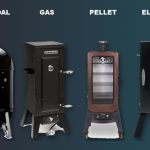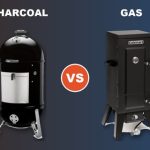

My electric bill jumped enough one August that my wife actually asked what changed. Turned out I’d been running my electric smoker almost every weekend that summer, plus a couple of long overnight cooks, and I’d never actually sat down and calculated what that was costing versus the propane and charcoal I used to rely on. So I did the math properly, across all four fuel types, using actual current utility and fuel pricing instead of the vague “it’s cheap” answer I’d been giving myself for years.
The Real Numbers, Fuel by Fuel
Electric
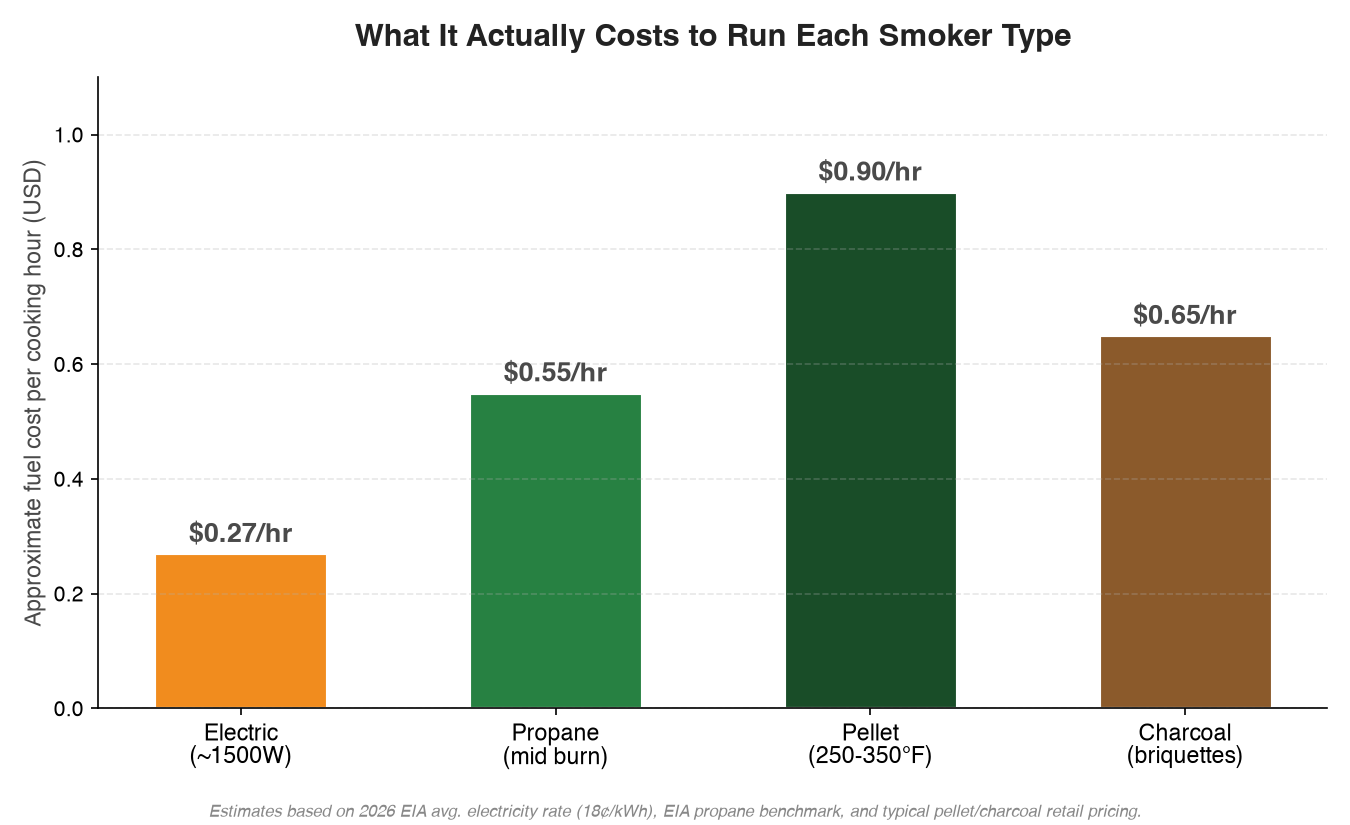
At the current 2026 average U.S. residential electricity rate of roughly 18 cents per kWh according to EIA electricity pricing data, a typical electric smoker running around 1,500 watts during active heating costs somewhere in the neighborhood of a quarter per hour of actual heating time. Smokers don’t run the element continuously once they reach temperature, they cycle, so real-world cost per hour tends to land even a bit lower than the max-wattage math suggests.
Propane
Propane pricing works out to roughly 85 cents per pound when you refill a 20 lb tank rather than exchange it, based on 2026 retailer pricing. A mid-size gas smoker burning at a moderate rate lands somewhere around half a dollar per hour of cooking, though this varies more than electric based on outdoor temperature and how often you’re opening the door.
Pellet
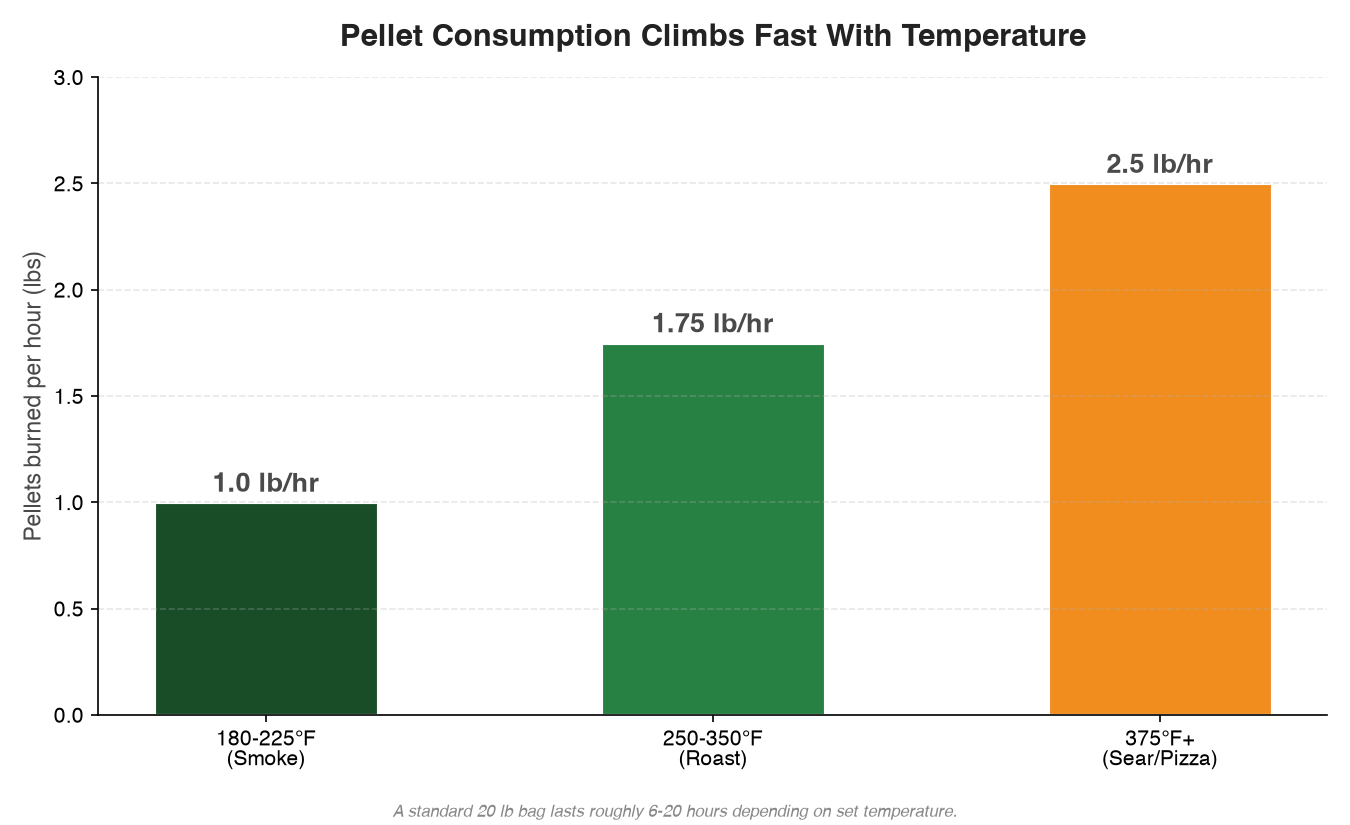
This was the one that actually explained my summer electric bill confusion, it turns out pellet grills often cost more per hour than people assume, not less. Per PelHeat’s pellet consumption data, at typical smoking temperatures you’re burning close to a pound of pellets hourly, but push into roasting or searing range and that climbs toward two and a half pounds an hour. At around 85 cents a pound for decent bulk pellets, an aggressive high-heat cook can run closer to two dollars an hour.
Charcoal
Charcoal sits in the middle of the pack cost-wise, cheaper than an aggressive pellet cook, generally a bit more than propane or electric per hour depending on briquette pricing and how much you’re using to maintain temperature over a long smoke.
How I Actually Tracked This
I’m not an electrician and I didn’t want to guess, so I picked up a cheap plug-in wattage meter, the kind people use to check how much a space heater costs, and ran it on my electric unit for a few cooks. It confirmed what the spec sheet suggested, but with one detail the spec sheet doesn’t tell you: the element cycles on and off far more than I expected once the cabinet reaches temperature, sitting idle a good portion of a long smoke rather than running the full listed wattage continuously. That’s the part that makes electric’s real-world cost even better than the worst-case number on the box.
For propane, I started weighing my tank before and after cooks instead of guessing from the gauge, which is notoriously unreliable in the middle range. That gave me a much more honest per-hour burn rate than eyeballing a needle ever did.
Why This Rarely Shows Up in Buying Guides
Most comparison content focuses on the upfront price of the smoker itself and skips running cost almost entirely, probably because the per-cook difference feels small enough to ignore. But if you’re smoking weekly rather than a few times a summer, that difference compounds fast. Someone running long pellet cooks every weekend could be spending noticeably more over a year than a neighbor running the same schedule on electric.
It’s Not Just Fuel Cost Either
A full cost picture includes a few things people forget. Charcoal and pellet smokers generally need more accessory spending over time, brushes, chimney starters, grease management supplies. Propane tanks need periodic replacement or recertification after enough years of use. Electric units are the simplest here too, mostly just replacement wood chips and the occasional gasket.
Buying in Bulk Changes the Math Too
One thing that shifted my own numbers over time: buying pellets and propane in bulk rather than small quantities. A 20 lb propane tank refilled at a bulk-fill station costs noticeably less per pound than exchanging a tank at a convenience store rack, sometimes by a wide margin. Pellets follow the same pattern, buying a season’s supply in bulk bags from a warehouse club runs meaningfully cheaper per pound than grabbing individual bags as you go. If you’re smoking often enough for running cost to matter, buying your fuel that way tightens the gap between fuel types more than people expect, though electric still tends to come out ahead even after accounting for it.
So What Does This Actually Mean for Your Decision?
If you cook occasionally, a few times a month, the fuel cost difference across any of these four types is genuinely too small to be a deciding factor, pick based on flavor and convenience preferences instead, which is exactly what we walk through in our complete smoker grills buying guide. If you’re smoking weekly or running long overnight cooks regularly, electric’s lower running cost becomes a real, compounding advantage worth factoring in, something our electric smoker reviews get into in more detail alongside which specific models run most efficiently.
My electric bill mystery, for the record, resolved itself into a completely reasonable explanation once I actually did the math. Turns out a quarter an hour adds up slower than I’d feared, and a lot slower than the pellet math would have.